Friday, July 1, 2011

Never give up on "Strange"

Dr. Linda Freeman: Anything bothering you lately?
Charlie Harper: Well, there is this one thing, but I don't know if it's medical or psychological.
Dr. Linda Freeman: Tell me.
Charlie Harper: Lately, I've passed up a couple of opportunities to get some strange.
Dr. Linda Freeman: *Strange*?
Charlie Harper: Oh... Women with whom I have not previously been acquainted.
Dr. Linda Freeman: Oh, right, strange. Charming.

For those of you who aren't familiar with the characters, they're from Two And A Half Men. (For those who are even geekier, its Season 6 Episode 15)

I've shared this for two reasons. One, I find it incredibly funny how the character objectifies women. Two, I like "strange" too. Don't get me wrong, I'm not really referring to women here, but, I'm always one to try out new things. As a kid, I once came across this poster which read, "Between two evils, pick one you haven't tried before". Once again, I apologize for the poor choice of examples to convey my point. Apparently, Google couldn't help me find alternatives without sex and alcohol involved. 

Give yourself the "Strange" treatment! 

Enter a restaurant and instead of going through the menu, ask the attendant to get you what he feels is good. Don't fuss over the type of sauce, side-dishes etc. Try out something new for a change, what's the worst that can happen? I'm yet to ever order a drink based on what's written under its name. If the description was important, it wouldn't be in such a small font, would it? 

When out in a lounge, bar or just waiting for a table in a restaurant, strike up a conversation with the girl opposite you. No, you don't need to blast off on a romantic tangent, just talk. You'd be surprised how interesting the opposite sex seems when you take sex out of the picture. Wait, scratch that! 

Ask your friends to pick something to do & don't bother resisting their choice. I recently went to see Vagina Monologues, with a group of 5 women nonetheless (slaps forehead) & left after an hour of intense laughter. 

Something you should know about the "Strange" Treatment, it's especially good if you're lethargic. There's nothing I hate more than having to plan, co-ordinate & arrange for 'days out'. Strange does all the work for you & things work out most of the time. Though I strongly suggest those with a neo-Nazi, ultra-authoritative personality to stay away. You're one kind of strange I'd pass up on any day! Strange isn't about losing control, its about giving it up peacefully.

Cheers to another strange weekend

Saturday, June 25, 2011

The Guess-work Amplification

I've always loved Viva-voce (oral) exams, I really miss them now. They not only give you a great chance to show off just how much you know, but also how well you can communicate with the examiner. No two examiners are alike, and neither are any two vivas that an examiner takes. There're so many variables involved, there's no way that one can be "totally" prepped for these exams. Not a lot of fellow med students appreciate vivas; a lot of them know the matter but are unable to formulate a differential diagnosis, argue their points etc.

Some of the wackiest situations are when the examiner starts off on a completely different path than what you have taken, now he/she expects you to not only justify why you weren't wrong, but also why the examiner could be correct. Another is when some examiner says something outlandish & grossly wrong, leaving you to correct them. It's made for some damn interesting stories over the years.

One thing remains constant in every exam though, your ability to guess & exaggerate in front of the examiner. There's a lot of slang that's used to describe this phenomenon, "Butt मारना ", "Globe मारना " etc. I know they don't make sense at all,  but they've reached a level of national acceptance in med schools! You can either wow the examiner with your special gift of nonsense or frustrate them to new heights! Like all the crap we pull in exams, its a double-edged sword, with a shit-ass barbed handle to boot! 

There was a time last year when all of us were so apprehensive of identifying a particular sign, giving a definitive diagnosis, living a rough line of treatment. We all second-guessed ourselves, confused as a hound in  a meat factory about what we were about to say. It definitely didn't help when we had to invent symptoms, signs & diagnose a patient who wasn't a classical presentation; better yet when we tried to "Globe".

Things have changed so dramatically its insane. We now give spot-diagnosis without batting an eyelid, notice signs & argue clinical findings without giving it a second thought. There's something magical about internship because you're never worried about anyone grading you, never really worried about the patient because the hierarchy above you is always around to check on what you do. Vicarious Responsiblity (Respondeat Superior) is one of the few perks in internship, meaning that if we screw up, we're not held responsible. It's given us wings & pushes us to diagnose more often, report irregular findings with greater confidence & try things that we would otherwise never have the guts to do! I wanted to leave you with a quote on how the practice of medicine revolves around an intelligent guess; but somehow I just couldn't find it. Well, here's a funnier one instead:

"The reason doctors are so dangerous is that they believe in what they are doing"
- Robert Mendelsohn

Tuesday, June 14, 2011

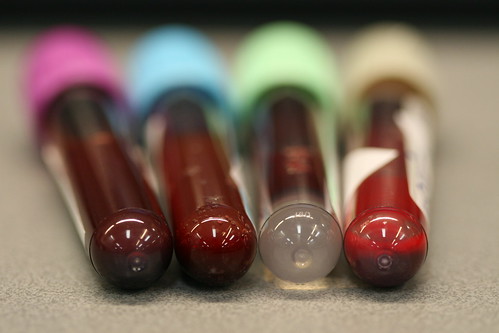
What rhymes with blood?

There once was a doctor fresh out of school,
About to enter a hospital very cruel.
He looked around the ward, totally enthused,
Not knowing he'll soon be thoroughly abused.
The residents knew how this creature would work,
With wide eyes in the shadows they'd lurk;
Hunting, searching, grabbing at the chance
To make him on their fingertips, dance.

Everyday patients would come & go,
But somehow his knowledge would never grow.
Then one day he finally decided,
He'd do no work unless he was properly guided.
He'd prod & pry & request on both knees,
"Sir, won't you teach me what you're doing, please?"
"Alright" was the reply, the resident still undecided,
He looked around & towards a patient he glided.
"Here's this patient, draw his blood", he said
The intern would rather treat the disease instead.
Fresh out of school he still jumped at the chance,
Not knowing this would end up becoming his ritual dance.

For from that morning his life would flood,
With endless, over-powering collections of blood.
Days passed by without any respite,
Still trying to overpower a small vein's might.
He knew that soon something needed to be done,
Looking at his own veins made his head spun.
He told his superiors, "Sir, Why not give it a rest?
Why we need so much blood, I cannot digest
Every morning, I bleed these men & women dry,
And, if it clots, I must give it another try"
They just laughed & handed him another list,
More blood to collect, the intern got pissed!
The patient list crushed within his fist,
And so his protest they easily dismissed.

He walked over to the door & hung up a sign:
'Without blood, urine & stool we can't make you fine.
And if you so choose to decline our request,
I love you for finally giving me some rest.
Here, the needles are not the only pricks,
Cause these doctors can be such dastardly dicks.
Soon I'll bid adieu & be out of your hair
Leaving another intern be the cause of despair'


The 'Relative' Paradox


Its been over a month since my last post, but that’s mainly because I was having my ass handed to me in my I.Med posting. Now that things are somewhat back to normal, I’m going back to the short notes I took during these past few weeks for “blog-worthy” inspiration. Here’s my first attempt:

We’re often told by successful physicians that establishing a healthy doctor-patient relationship is half the battle won. No disrespect to those much more learned than I, but the trick is to win over the relatives. I know the ‘care’ in ‘healthcare’ centres around patients, but they’re usually irritable, loud, depressed, incontinent, have a dull sense of humour, unconscious, uncooperative & did I mention incontinent? Patients do not like doctors, irrespective of the broad grins they flash during rounds. As soon as we face the next patient, there’s the usual “She didn’t even touch me today”, or “Stupid fellow keeps examining me”, “That’s it? Who’s going to ask me about my symptoms again?” & my personal favourite, “That was your senior doctor? Even the intern seemed better than her!”. 

Patients do not care about what we have to say, they’re rarely bothered. It’s the relatives that do all the questioning, get complicated tests done, get consent & manage to keep the patient from absconding from the wards. I’ve seen people smuggling tobacco, bidis, & even alcohol into the wards for their relatives. Not surprisingly, these are the fellows with liver failure, kidney disease & lung cancers. This is only to repeat that patients are often just plain stupid & want magic drugs that cure them, without changing anything else in their life.

So, the most complicated thing a physician does every day is talk to the relatives. If only our patients weren't  so serious, everyone would see the awesome comedy that plays out (Wait, was that a pun?). Even when conveying that things are out of your hand, you must look like you’re in complete control. You must use complicated terminology when speaking in vernacular languages to convey that what you’re saying is so sophisticated, there’s no other way of explaining it. Conversely, for those cases that refuse to budge from their vices, you need to create a prognosis so grim that they crap themselves before you can utter “adult diaper”. Case in point - a man with severe alcoholic liver damage being discharged after he's relatively stable:
Patient: Sir, thank you for all the help, I am feeling great. I hope I will stay this way
Doctor: Stay this way? Feeling great? Do you know how much damage your alcohol has caused? How much difficulty we had in treating you?
Patient: What's wrong then?
Doctor: Everything! Your liver's fried, there's nothing I can do apart from giving you my own liver, which I won't. Your liver's going to rot slowly if you don't drink & you'll die quicker if you do.

Now, the resident did what was right, but without proper counselling who's to say that the patient won't drink away his stress *again*

I’ve found that you can broadly classify doctor-relative interactions into two distinct groups:
  1. The secretive doctor & over-enthusiastic relative: This is the most common sight in our hospitals. Residents are overly guarded about not just the diagnosis, but also patient prognosis, the cost of tests that need to be done & sometimes even about who’s actually treating the patient. Everyone wants to be top-dog. They’re usually all bark and no bite! 
  2. The over-informative doctor & dumbfounded relative:These guys will spend hours explaining rare procedures, disease etiopathogenesis, drug dynamics, prognostic indicators to the relatives, often unsuccessfully. At the end of this awesome conversation the relative innocently asks, “But what are we supposed to do now?” We quietly hand them a form & set of instructions for tests (after slapping our foreheads). These physicians usually have a successful private practice with a long waiting list for appointments or have studied abroad for variable periods of time. While they’re spending precious minutes away, the residents are usually grinding their teeth or trying to telekinetically blow their senior’s head up! Example below (just imagine they're doctors, not physicists):


Sunday, May 1, 2011

Why Sundays are so damn difficult


Sundays are the worst days of the week. I know, you think I'm crazy, right? Everyone says the same thing. I'm at my laziest best those days because nothing that I can plan matches up to my 'Smooth Sundays' criteria:

1.     It must not involve any great amount of physical work 
Over the summer months, that means I shouldn't have to walk / jump / skip / leap / prance / run / stroll to such an extent that I break into a sweat

2.     It must not make me sick
New restaurants are a no-go for this very reason, cause you don't want to start off your week with extended time on the morning throne

3.     It must not keep me up
Bedtime on Sundays is damn important. I appreciate that now since internship started. God knows how sad a it is to start a Monday morning with a large red LATE stamped across your name

I'm still in the process of figuring out what other yet unwritten rules I may have on Sundays, but I'll be taxing my brain too much in the process & it goes against... wait!! Just remembered rule #4

4.     I must not work my my brain any more than it needs to


Phew, that a whole lot for the day. Until then, I'll leave you with my summer's blockbuster choices to make your Sunday AWESOME!


Hopefully I'll be catching this movie tomorrow. Its important cause its the first superhero movie that's released since forever! Here're the movies that will make us wait longer:


Monday, April 25, 2011

There's more?!?


The intern in me is almost two months old right now. I’ve seen what seems like a buzzillion patients & it’s taken all that I thought I'd learnt from my practical exams pretty well into a shallow grave. Let me elaborate…
The first rule in a clinical exam is ‘Be thorough… or the examiner will be thorough with you!’. We got about 45 minutes with each patient& we spent every agonizing second asking, “What else?” This generally meant that our histories were long and arduous & there was always something jotted down on our sheets using which you can present the case differently to the examiner. That doesn’t mean we twisted the facts, just that we were thinking creatively.

Anyways, so I’m 2 months old now & one of the first things I’ve learnt not to ask is: “What else?” This statement is usually followed by an endless rant of nonspecific complaints that makes me wish I was studying abroad, because then I could add some anti-psychotics, anti-anxiety meds in their prescriptions & they’d take them without batting an eyelid! I’m not saying that there isn’t anything wrong with the patients, but some act like little sissy babies at times. “Doctor, I’ve had throat pain since last night”, “Sir, I have fever since this morning”; sounds familiar?

A large number are chronic malingering (Yes, I spelled that right, google it!) cases & yes, they need some psychiatric help. But, given that Indians regard most psychiatrists as “पागलों का डॉक्टर”, I’d doubt they’d follow through even if I could find them some help! Over the course of the past few weeks, I’ve realized some are even hoarding up medicines, selling unopened bottles out in the wild. Patients ‘classically’ come with ‘classical’ complaints & if they don’t see a pill they recognize, they brew up a storm!

The system is flawed because quite a few cases that legitimately require extra help are surrounded by a superfluous cloud of “symptoms”. One may argue that I’m being impolite or callous & am miserly with my skills. But, I have the perfect example to illustrate just how many patients don’t require much help:
Last week, I was handling a Gynac OPD with a dental intern. The front desk didn't what "Gynac" meant turned my cabin into a general female OPD. We started receiving a steady flow of patients with similar musculoskeletal complaints. Was around 4pm when the dental intern asked why my prescriptions were becoming so predictable. I just smiled as I was just about to start writing the prescription of a new patient complaining of abdominal discomfort. I’d already finished with all my relevant history when the following conversation took place.

Me: So, any other complaints that you may have?
Patient: No, none at all
Me: You’re 45 years old, no joint pains?
Patient: Yes, now that you mentioned it, I have knee pain
Me: Do you get an electric current like pain in your thigh or buttocks?
Patient: Yes, how’d you know?
Me: Any problem in moving your shoulder?
Patient: Yes, it hurts when I move it. Can you please give me something for that too?
Me (to dental intern): Can you please jot down the same prescription as my last one? I need to take a break.

Dramatic exit

Friday, April 22, 2011

I, Gynaecologist


I was taking a personal day about 10 days back when my phone flashed a call from some random landline. Before I proceed, I must stress that interns are petrified to take calls from unknown numbers lest they be called in for some work. I had managed to get that personal day after a lot of hassles & was truly worried that I’d been found out. But, the optimist that I am, “what’s the worst that could happen?” rang through my head. I picked up the call & it turned out to be from my Dean’s office (D'oh!). Here’s how the conversation went:

Dean’s Secretary (DS): Hello, Doctor, I’m calling from the dean’s office (Gulp). I just wanted to confirm your participation in the camp this weekend.
Me: What camp? I’m in my rural posting today. I haven’t been informed of any camp
DS: Well, I have your name right here with one of your co-interns. There’s a camp this weekend that you’ve been selected to go to. I don’t understand why you haven’t been informed yet, but I need a confirmation from your side
Me: You can’t be serious! This is the first I’m hearing of this. I’ll call back after I call my department.

Fast forward a few seconds:

PSM Dept: Yes, you’ve been selected for the camp. I’m surprised you haven’t been told yet (Duh-huh!!). Anyways, you’ve leaving this Saturday

So much for my optimism

“I hereby do solemnly swear to uphold the Intern’s code which clearly states that I MUST NOT pick up calls from unknown numbers. May Hippocrates bless my broken soul. Amen”


To cut a long story short, we left that weekend for a camp near Junnar, a part of Pune district. The camp was being organized by an NGO & as such had requested residents from almost every specialty (or so I thought. More on that later) from three different hospitals. My friend and I were the only two interns from medicine. The dental college has sent over their own interns but also a lecturer for additional expertise.

If there’s something I absolutely love about trips is the travelling. The winding ghats have a way of playing Russian Roulette with our inner ears but it usually spares me just enough to enjoy the journey. There’s this amazing thing that one sees when moonlight and high-beams light up the countryside. Ever noticed the thin line of demarcation where your headlights stop lighting up things besides the vehicle? The trees, shrubs just disappear into the darkness as you make your way through. It’s a brilliant way to relax, introspect, get your thoughts in order. I just wish my camera could've captured things the way I saw them. 

We left the next morning for the site of our first camp. Was disappointed on our way; the landscape seems so uninspired during the day. The one positive was that we got along royally with residents from other colleges. We joked that while PSM from other colleges had sent senior residents, our dept apparently trusted us interns far more than we earlier assumed. We went so far as to spread word that we were in our post-grad. I don’t need to tell you no one bought that crap!

The setting of the camp was straight out of a movie from the ‘70s. Dilapidated school, classes without fans, decorated walls, outdoor restrooms, a lot of greenery, but strangely hardly anyone around. The doctor-patient ratio for the 1st hour seemed to stagnate around 25:1, a number that perhaps the camp wouldn’t be too proud of. Some wise character had apparently spread word that the camp was going to start at noon!! Large cards prominently displaying OPD names were being nailed to each classroom door when the camp incharge shouted, “Doctor, you’re in charge of Gynac today”. Now, I’m not one to shy away from situations like these; still wearing a confident look, spring in my step I made my way over to “MY” OPD. Right then I heard the same woman shout out that I’d be running the OPD with a dental intern. I heard a large thud that I swear I assumed was my jaw hitting the ground! “Wacky stories to tell back home”, I thought; things couldn’t get any funnier than this.

While I think I’ve polished my Marathi tremendously over the course of MBBS, my peers seems to think I’m delusional about it. Not unexpectedly, not a single patient I saw that day was able to converse in Hindi. I’d had a lot of practice the month earlier in my rural posting so I decided to power through this as well. Thankfully the dental co-intern empathized with me & helped me out a lot. But, at the end, even she couldn’t figure out what some of the patients had to share. Some of the phrases I’ve heard loosely translated from Marathi were: 
Water doesn’t flow on my body; 
My gas stones are causing problems; 
My body is slipping out from my body. 

I’d dare anyone to figure out their hidden meaning in the comments section. I D-A-R-E you !

Knowing I’d be lost among a sea of specialists in the other OPDs, I chose to volunteer to run OBGY the next day as well. Not a smart move on my part, since the front desk was forwarding all females with any complaint over to Gynac. Most cases seemed to be the ubiquitous low backpain, tingling numbness, giddiness, & lest I forget, the “generalized weakness” pandemic. Its times like these that really make me wonder where the thrill of practicing medicine has disappeared. But ever so often there came a woman in genuine need of someone’s help, where I could really “counsel” a patient. I could do little for most given the limited repertoire of drugs at my disposal but it was a learning experience just figuring what went wrong and why. Overall, I saw over 150 patients over two days, referred a few for further evaluation & made a “bus-load” of friends. Quite a productive weekend, but it hurt to know that I’d rejoin the regular rotation in PSM at 9am the next day especially since I reached back home at 3am! The life of an intern...

Sunday, April 10, 2011

Story Of The Village Witch-Doctor (Part II)

I feel drunk but I haven’t been drinking

My first few hours at the HIV Center centred on a lot of clerical work. Patients came & went, I asked about any new complaints they had, had a good look at follow up cases of those with infections & made the necessary entries in their files. A few patients moved on this way. Then came this particular chap whose medication was changed the previous month as the government had no stock of his regular meds. He complained of tingling numbness down his legs, inability to hold his fingers steady, a constant headache & then, “the feeling of being drunk” all the time. Now, I’ve seen a lot of alcoholics & malingering patients over time, but this guy wasn’t either one of them. My senior intern quickly remarked, “So I should continue the meds, right? Who doesn’t want the feeling of being drunk without drinking?”. The patient didn’t see the lighter side of the comment. The fault lay with this drug Efavirenz. I saw hoards of similar patients with the same nervous system complaints. The in-charge went so far as to claim it was a bad decision to let this drug stay in the HIV program, but we don’t really have a large pool of meds to choose from. Every year, HIV meds are stupidly distributed to those who do not need it. Patients have even faked their CD4 counts to be eligible for free high dose meds from the government, not realizing they’re doing themselves more harm than good. The virus continues to spread, to evolve, albeit at a pace medicine has failed to match. So here I was distributing Efavirenz to patients who didn’t actually need the drug; started on it just because the government failed to stock the regular supplies effectively. Years later when their regular meds fail, these patients may not even respond to Efavirenz because the short-term treatment in the past has made their infection resistant to the same. What do I know? I’m just an intern filling up files.

Why me?

It was my third day at the center when a 40 something local man came into our room. He had been newly diagnosed with HIV while his wife tested positive. Now, his wife may be in the window period of infection where tests are false negative. But, to be sure that she doesn’t contract the infection from her husband in the event she’s actually negative, we had to explain that they needed to avoid sex or at least use condoms for a few months. I thought the conversation would be fairly straight forward until he asked, “Why me? I’m a knowledgeable man. I knew everything about HIV and how it spreads. I’ve never visited sex workers. Why me?”. It would be very easy to assume he lied about the sex workers or has been doing drugs, but no man would be as traumatised if he knew why he had this disease. His history suggested he’d taken multiple injections in the past few years. But he’d never seen the new syringe being removed from its packing, nor the destruction of the needle after. He fell prey to some idiot’s satanic scheme of reusing syringes and needles. The sad part was that this isn’t a new phenomenon. One may assume that such things are restricted only to remote villages like this one, but that couldn’t be farther away from the truth. Just a few years back, we heard of a doctor from Nair hospital finding a repackaged syringe in a store around Mumbai Central. Public care under government undertakings are soft targets so we fight back with “trick” syringes. Once these collapsible syringes are used (drug/vaccine drawn in & pushed out), any further effort to use again results in the piston breaking up. Ingenious!


There’s something very tricky about a public-private partnership in medicine. Often, the institute is held ransom to the guidelines issued by government authorities often randomly or based on utter bullshit (case in point above). Meds don’t reach on time, there’re patient targets to be met, patients don’t follow up, tests aren’t made available on schedule. One thing I learnt is how far a person is likely to go to conceal their HIV status. Every medical center has a “Catchment Area” of a few kilometres radius from where they usually get patients. But, in the case of HIV, patients would travel from remote regions and come to our center to avoid the risk of being spotted by someone lest they visit a center around their residence. So, while our catchment area for the cold and flu are quite small, that for HIV far exceeds it. But I was glad they came to such a center, where they placed patient “care” above all else

Sunday, April 3, 2011

Story Of The Village Witch-Doctor (Part I)

So I’m barely 20 days old in my new ‘Dr.’ avatar & the time had come to smuggle me away to a land far far away from Bombay; a curious little village called Ganeshpuri where I would be employed in a Medical Center specializing in HIV care. Although this center was a collaboration between an NGO and my parent hospital, the latter did not run it. Its importance lies in the fact that these guys meant business, so no funny business! (I apologize for the silly jokes, more to follow. Sorry again) 
               
Even before I left for the rotation, there was controversy. Interns decided to go on strike demanding a hike in our stipend (Info here). Although I whole heartedly supported the cause, I was dreading the fact that I may have to go to this place again next year to compensate for the holiday I took on the day of the strike. After a lot of cajoling & emotional blackmail by friends, I decided to brave the dreaded “Repeat” as we call it. Collective spirit turned to agony that afternoon when I realized that a few dim-witted doctors (has a nice ring to it) had attended their postings that day. I was mad partially because they didn’t join in for the strike, partially cause I was damn jealous they got their attendance. But, I digress.
               
Ganeshpuri is a little town, on the outskirts of Bombay. I woke up at 4.30am that morning, caught the drowsiest (hopefully not inebriated) cabbie around for a ride to Dadar station. In my shameful stupor, I had miscalculated the time, reaching an entire 30 minutes before the train; I lugged my baggage over to the platform right to the other side of the station (regular passengers will know where Virar Fasts arrive). Picked up a thick TOI & I was set for the next 75 minutes. 


Met my fellow intern at Virar, made a few calls to figure out where I would find the all-important shuttle to my center. I’ve never been to Virar earlier, & felt absolutely timid seeing the sheer number of people trying to get into southbound trains. I was extremely anxious not to miss the medical shuttle to Ganeshpuri; failure would mean an additional hour spent hunting down & then travelling in local ST buses, being marked late, getting shouted at & not being assigned any work for the day. Twenty minutes, a long walk, short run & a lot of panting later, I was snugly seated in the shuttle.


“Yes, intern, you need to go to the HIV Center. Get your luggage & move on”. Before I say anything else,I must state: I had a lot of luggage! Surprisingly I found a familiar face in a college senior who was also posted there. He led me first to the living quarters where the most inviting plate of noodles awaited.


Off to the HIV center then... Part II coming soon. 

Friday, March 18, 2011

I need some drugs (for my patients)


Today I mark my 19th day as a Doctor. I’ve dreamt about it since years, implied I already was since I got into medicine & now that I finally have the title, it feels surreal. It still hasn’t sunk in entirely, but there’re everyday moments now that make me feel proud; like the grinning uncle of patient whose wound I dressed or the day the residents insisted I add the “Dr” before my name in hospital documents. I'd like to share in small parts, my thoughts & opinions in my “practice”. 

The curious case of the doctor without drugs:
Every 2nd patient I’ve seen these past 2 weeks was told by me that one important drug in their prescription is unavailable at the hospital. I wouldn’t really mind if it was just Paracetamol or Avil which we generally prescribe for the omnipresent cold or fever. The problem is that important medication for seniors like anti-diabetics & anti-hypertensives are not available. Their unavailability is fast becoming chronic much like the diseases they’re meant for. I stress on “Chronic” because most of these patients are either retired with hardly any money or working their feet off (I don’t say socks because they work barefoot). I will never forget the sight of a woman watering up in front of me with a BP of 155/95 because she had just spent Rs.10 for case papers with hope of medication lasting 2 weeks; medication that she hasn’t taken for 2 weeks already because it wasn’t in stock & the situation hasn’t changed now either.


Hierarchy is a funny term:
Everyone in a hospital or medical college knows that there is a certain chain of command which you cannot break. At least that’s what students & interns are made to believe. Funnily, employees that are ideally ranked below us, meant to assist us in doing “our” job, are shouting at full lung capacity about how we’re not supposed to bother them. The dresser asks the patients to go bother the doctor in the OPD to dress their wounds. The nurse shouts because we asked her to let go of her newspaper & get a new stock of drugs. 


There something very wrong in our system because I know the problem is only local. I know of systems abroad where even the head nurse or matron is supposed to report to the lowly intern & cannot challenge him, unless things go grossly wrong. This isn’t to say that every non-medico out there is pain, there’re those who are genuinely nice to talk to, ever-enthusiastic about work. But, they’re few & far between, much like our drugs. I’d like to quote a friend, “Everywhere else in the world, you must pay someone to NOT do their job. India’s the only place where you need to bribe someone to do their job, something they’re already paid for”

Yes, Teacher:
I always remember the advice of my mother who said I should not judge on the basis of what a person has achieved but rather how much they have achieved in their present position & set of circumstances. I’ve never forgotten this when I’m dealing with junior colleagues because I know I was exactly in their position a little while back. I want all the senior residents, lecturers, professors to read this. I want you to know that you reached where you are today after crossing various levels. You weren’t born a doctor; neither did you pass out of MBBS as a cardiothoracic surgeon. You’re at your position with time, & efforts of those around you who chose to pass on their knowledge. I want you to know that when you teach, you’re a part of a tradition 2000 years old where a doctor taught his apprentice. You aren’t doing us a favour & I’m not a burden to you; rather you’re a burden onto me... a worthless weight which I must lug around without reward. Think back to when you were just a measly intern or student. Did you not feel let down when someone “chose” to ignore your existence? I solemnly promise when I’m moving up this ladder, I will hold nothing but respect for my juniors because they have already overcome a lot to be in their position. I will not try to flex my authority over them by demeaning them or making their life difficult. I will teach, without expecting anything in return but time & patience. I shall hold a position to educate, not for the title. I will be a teacher first, not just a professor.

You are not just my friend:
Last week I gave my first IM injection to a 10 year old girl. I’ve seen it a million times, I know where & how I’m supposed to stick the needle. But, I still felt the need for someone to be there with me. After it was all done, I thanked this friend of mine, a year senior to me. It got me thinking about all my other mini-milestones in MBBS, they’ve all happened with an eager senior from college egging me on. And it’s not just in the hospital wards. I can’t recall all the times I’ve been utterly confused, bewildered, devastated by the sheer stress of MBBS when someone who’s already been through it has talked me through the rough patch. To all my friends & teachers, thanks a million for all the practical help, late night SOS calls & a few drinks along the way.

Medicine is quickly becoming westernized:
I know we’re catching up quickly with world standards in medicine overall & technology is greatly improving; but I wasn’t referring to this in the title. While I wasn’t a big fan of the “doctor bhagwaan hota hai” philosophy, but I don’t care much for the inconsiderate, brazen attitude that some patients have come to develop. A few examples are: 

The doctors are out to kill me:
These guys doubt anything and everything you do for them. They will disregard any medicine that they will have to buy themselves, ignore key symptoms, refuse to go for referrals, & purposely hide important facts in history to test their doctors. Guess who they blame if something goes wrong


Guess what? I know what this medicine does:
These are generally the younger patients, who have been fairly educated or are extremely curious about what each drug does. Don’t be fooled, they are budding doctors themselves. No point remembering their faces, they won’t be back soon. Self-prescription is the name of the game.


The ‘chronic’ patient:
These are generally women around 40 years of age with non-specific symptoms that are treated symptomatically. I recently got to know that they hail from extremely conservative families where the only trip to the outside world is when they’re unwell. Apparently, they even swiftly discard the drugs. Thanks a lot for that, we surely didn’t need those!

There’s just so much to say about the spectrum of patients, I think I’ll write another article.

Until another patch of creative boredom,
SS

P.S: Half day at work tomorrow, WOO-HOO !!